
Book now
Email :
WhatsApp :
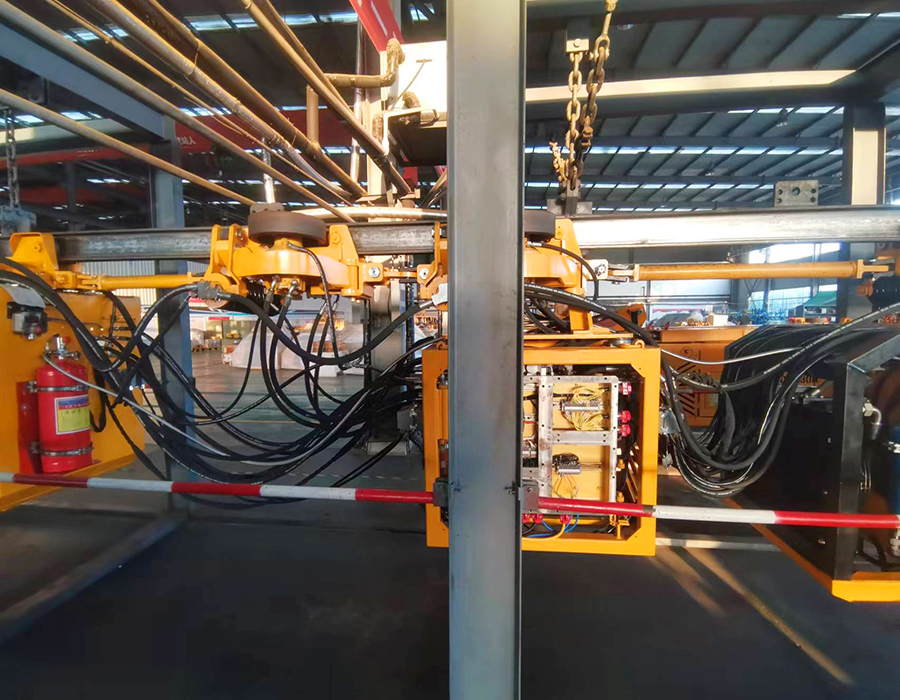
In the complex environment of coal mining, mining industrial vehicles such as monorail cranes, loaders, and trackless rubber-tyred vehicles serve as core equipment for transportation operations. They operate for extended periods under extreme conditions of high temperature, high dust, and strong vibration. Engine compartment temperatures can exceed 200°C, the risk of electrical wiring aging and short circuits is frequent, and combustible materials such as coal dust and gas accumulate, making vehicle fires an "invisible killer" threatening the safety of miners and the efficiency of coal production. Statistics show that over 80% of underground mining vehicle fire accidents originate from electrical faults or high-temperature components igniting combustible materials. Furthermore, due to the enclosed underground spaces and limited escape routes, fires often escalate to an uncontrollable state within minutes. Today, the emergence of automatic vehicle fire suppression systems, operating in a 24/7 intelligent monitoring mode, has built a no-dead-angle safety protection circle for underground coal mining vehicles, becoming a key aspect of the intelligent transformation of coal mines.
Underground mining vehicle fire hazards are prominent, making traditional firefighting models difficult to achieve breakthroughs.
The special operating environment of underground coal mines makes the fire risk for mining vehicles far higher than in surface scenarios. The four high-risk areas—the engine compartment, where prolonged operation leads to heat buildup; aging fuel tanks and lines causing leaks; insulation aging on electrical cabinet wiring causing short circuits; and sparks generated from friction between tires and metal components—can trigger a fire at any moment. Compounding the issue, underground spaces are narrow and ventilation is limited, causing smoke to spread rapidly and visibility to plummet after a fire breaks out, posing significant challenges to manual inspection and firefighting efforts.
Traditional firefighting methods rely on manual detection and operation, which not only suffer from the drawbacks of "slow detection and slow response" but also expose operational personnel directly to the dangers of high temperatures and toxic smoke. Data indicates that traditional manual firefighting takes at least 3 to 5 minutes from fire detection to organizing a response, during which time the fire spreads rapidly, potentially causing over a million yuan in equipment damage and even threatening the safety of underground personnel. Faced with the 24/7 continuous operation demands of coal mines, traditional firefighting models can no longer meet the actual requirements for safety prevention and control.
Empowered by intelligent core technology, the automatic vehicle fire extinguishing system achieves three major breakthroughs.
The mining vehicle automatic fire suppression system, leveraging advanced technology, has been upgraded across the entire process from detection, decision-making, to execution, fundamentally changing the passive firefighting situation for underground mining vehicles.
Multi-dimensional detection, zero-delay fire identification:
The system incorporates multiple monitoring methods, such as bipolar K-type detection technology and mechanical temperature-sensing detection technology. Sensors are placed in key areas like the engine compartment, fuel tank, and electrical control cabinet to achieve millisecond-level temperature signal sampling. Mechanical temperature-sensing detectors are immune to electromagnetic interference, making them suitable for harsh underground environments. Intelligent algorithms analyze the monitoring data in real time, effectively filtering out false alarms to ensure accurate fire judgment. When monitored indicators exceed preset thresholds, the system immediately triggers an alert, buying crucial time for firefighting efforts.Multiple activation modes, ultra-fast fire suppression response:
The system supports three activation methods—automatic, manual, and emergency—to ensure comprehensive firefighting reliability. Upon fire confirmation, the automatic mode requires no human intervention and can activate the fire suppression program within milliseconds, precisely delivering the extinguishing agent to the fire source. Operators can quickly activate the system via manual buttons upon detecting a fire. In extreme scenarios where both automatic and manual modes fail, an emergency mechanical device can directly trigger the system, ensuring fail-safe operation.Customized adaptation, stable operation in harsh environments:
To address the harsh conditions underground, including high temperature, high humidity, and high dust, all system components utilize high-strength materials and advanced manufacturing processes. Water-based agent pipelines are made of Teflon and stainless steel, and nozzles are equipped with dust caps to effectively prevent clogging. Furthermore, detection points and extinguishing agent pipelines are custom-arranged based on the structural characteristics of different vehicle types, such as monorail cranes and support transporters, ensuring comprehensive coverage even in confined spaces and eliminating safety blind spots. The extinguishing agent can be selected from water-based, superfine dry powder, or perfluorohexanone types based on the fire scenario. Through fine spray technology, the agent evenly covers the fire source and penetrates its interior, achieving complete extinguishment.
In practical applications, this system has become standard protective equipment in mines across Indonesia, Papua New Guinea, and other regions. It not only effectively enhances the fire safety level of mining vehicles and significantly reduces the risk of equipment damage and production downtime caused by vehicle fires, saving enterprises from substantial economic losses, but also complies with the "Coal Mine Safety Regulations" and holds both Coal Safety (MA) and Mining Safety (KA) dual certifications. This means its design and production strictly adhere to national coal mine safety standards and have undergone multiple rounds of testing and evaluation by authoritative bodies, achieving top-tier industry levels in safety performance, reliability, and environmental adaptability. The dual certifications serve as a "safety pass" for the system, allowing coal mining enterprises to use it with complete peace of mind, further strengthening the safety defense line for underground operations and providing solid support for the stable production and sustainable development of coal mines.
The safe operation of underground mining vehicles is the lifeline of coal mine production. The automatic vehicle fire suppression system, with its 24/7 uninterrupted intelligent monitoring, millisecond-level response speed, and full-scenario adaptability, creates a no-dead-angle safety protection circle for coal mining vehicles like monorail cranes, safeguarding the lives of miners and ensuring efficient coal mine production.
Contact Us a ReachOut For More lnfo!