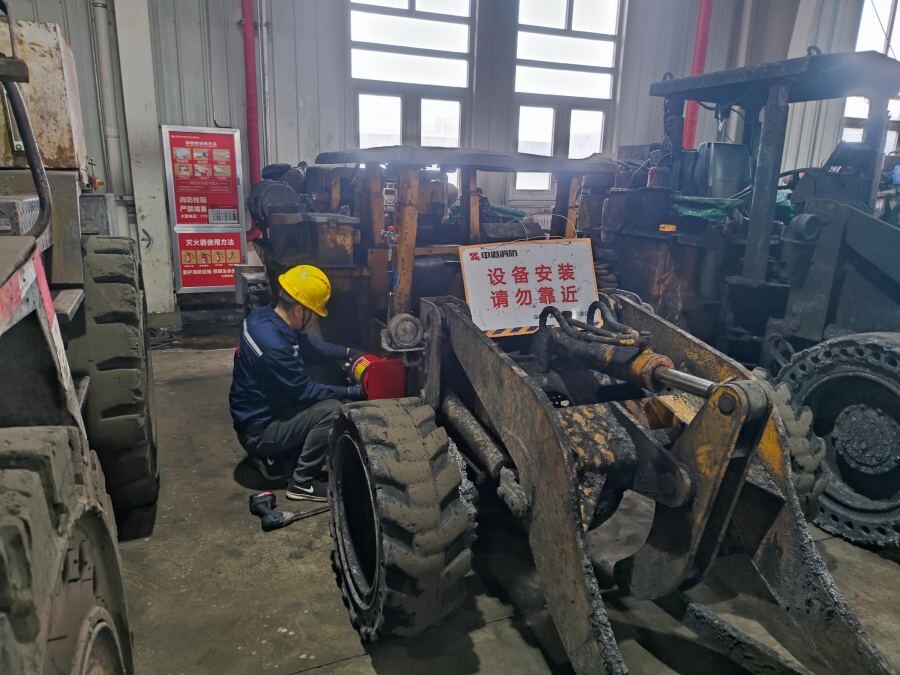
In industrial sectors such as mining, ports, and oil fields, the prevention and control of vehicle fires are of critical importance. With technological progress, automatic vehicle fire suppression systems have become a vital safety safeguard in these areas. Among the solutions available, mechanical and electronic automatic fire suppression systems are two primary options. This article delves into the characteristics of both systems to assist you in making an informed choice based on your specific requirements.Mechanical Vehicle Automatic Fire Suppression Systems are recognized for their non-electrical operation and purely mechanical activation. Utilizing a temperature-sensitive self-activation principle and pressure-balance design, these systems automatically initiate the suppression sequence immediately upon detection of a vehicle fire. This design not only eliminates safety concerns related to electrical power sources in underground settings but also significantly enhances the timeliness and effectiveness of the fire response. For underground mining vehicles, where thin air, coal dust, methane, and other hazardous gases make explosions a serious risk in the event of a fire, a non-electrical yet efficient suppression system is particularly crucial. Mechanical systems deliver excellent fire control performance in such environments, ensuring the safety of both personnel and equipment.
Electronic Vehicle Automatic Fire Suppression Systems incorporate advanced technologies such as the Internet of Things (IoT), big data analytics, precision nozzle spraying, and remote activation capabilities. These systems enable real-time monitoring and tracking of vehicle fire dynamics, allowing for the efficient identification of potential fire hazards. During the initial stage of a fire, the system can respond swiftly by triggering the suppression procedure, thereby ensuring comprehensive protection for the vehicle and its occupants. Furthermore, electronic systems can be equipped with additional functional modules based on operational needs, such as remote video monitoring and SMS notifications, providing a more user-friendly experience. These advanced features give electronic suppression systems broad application potential in environments like open-pit mining operations.
Regarding suppression effectiveness, both mechanical and electronic systems employ advanced extinguishing agents and technologies. These agents can rapidly lower the temperature of the fire source, inhibit flame spread, and achieve efficient fire control and extinguishment. However, due to differences in their application environments and locations, the two systems vary in terms of efficiency and adaptability. Mechanical systems are generally more suitable for non-electrical and potentially explosive environments like underground mines, while electronic systems are better suited for applications such as open-pit mining vehicles that benefit from remote monitoring and early warning capabilities.
Beyond suppression performance, the two systems also differ in terms of installation, maintenance, and cost. As mechanical systems adopt a passive design without complex circuitry, they feature a relatively compact structure. However, they often require higher installation expertise and a longer setup time. Electronic systems, integrating advanced technologies and modules, demand greater technical proficiency and professional support for both installation and maintenance. From the perspective of varying customer needs, electronic systems offer more comprehensive fire monitoring and early warning functions. Both types contribute to reducing fire-related losses and improving production efficiency, with electronic systems often presenting higher cost-effectiveness in certain high-end applications.
In summary, both mechanical and electronic vehicle automatic fire suppression systems possess distinct advantages. The choice of which system is more suitable depends on a customized assessment based on the vehicle's operating environment and actual fire safety requirements. In explosive environments such as underground mines, mechanical systems hold an advantage due to their non-electrical nature and high reliability. For applications like open-pit mining vehicles that require remote monitoring and early warning, electronic systems are preferred for their advanced technological capabilities. Regardless of the system chosen, it is essential to ensure it delivers excellent fire control performance in practical applications, providing robust protection for the safety of personnel and equipment.