
Book now
Email :
WhatsApp :

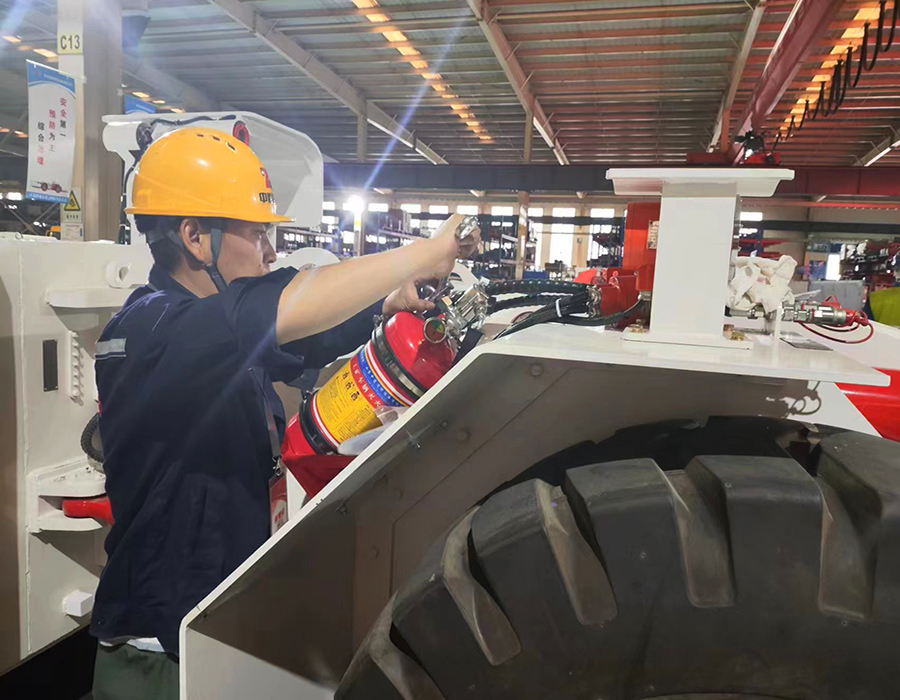
In today's rapidly evolving landscape of smart and green mines, new energy vehicles such as electric loaders, haul trucks, and rock drills are progressively taking over operations in coal, copper, and other mines. With the increasing adoption of new energy mining trucks, the critical issue of fire safety has come to the forefront, posing a primary challenge for mining enterprises in regions like Xinjiang and Shaanxi. The Jiutong Changsheng Automatic Fire Suppression System for New Energy Mining Vehicles has emerged as a benchmark solution. Leveraging intelligence, advanced technology, and robust safety, it stands at the forefront of mine fire protection, serving as a landmark product for addressing fire safety in vehicles operating in both open-pit/underground coal mines and non-coal mines.
Fire Risks in New Energy Mining Trucks
New energy mining trucks primarily use lithium batteries as their power source. Compared to traditional diesel-powered trucks, they produce near-zero emissions during operation, significantly reducing environmental pollution within the mine. However, the battery systems in these vehicles are relatively complex. Lithium batteries are susceptible to thermal runaway when subjected to impact, overcharging, over-discharging, short circuits, or high-temperature environments. Once thermal runaway occurs, the internal battery temperature can surge rapidly to over 500°C, potentially leading to fire or explosion. Additionally, frequent vibration, high dust concentrations, humidity fluctuations, and aging electrical circuits during underground operation can all contribute to electrical failures, which may act as ignition sources.
Intelligent Monitoring and Rapid Response of the Automatic Fire Suppression System
The Automatic Fire Suppression System for New Energy Mining Vehicles is a highly integrated and effective fire protection device. It employs advanced temperature detection technology with high sensitivity and accuracy, enabling real-time monitoring of key vehicle compartments such as the battery pack and electrical equipment bays. Its detectors utilize high-precision thermal sensing elements capable of capturing abnormal temperature signals at the earliest stage.
When the temperature exceeds the normal operating range and reaches a pre-set alarm threshold, the detector reacts instantly. It triggers an alarm device, emitting a sharp audible warning to alert personnel in the vicinity. Simultaneously, it activates the fire suppression unit, which precisely discharges the extinguishing agent through a custom-configured piping network directly onto the fire source. This ensures a swift and effective suppression response. The entire process—from fire signal detection to agent release—takes only seconds, extinguishing the fire before it can spread and thereby minimizing potential losses.
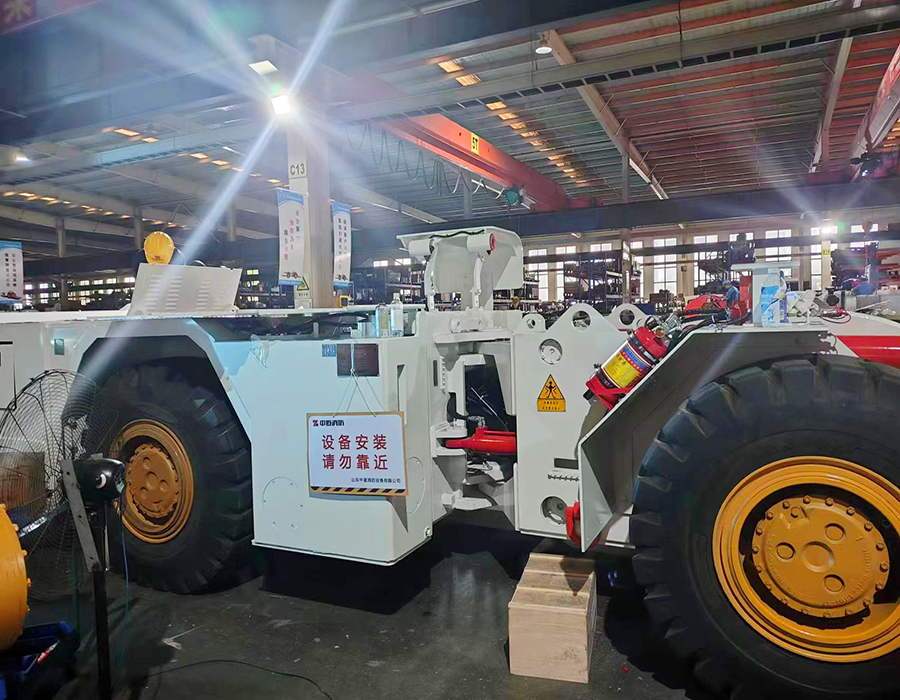
Customized Design and Efficient Suppression
The system also features a highly customizable design. Detectors and suppression nozzles can be strategically arranged according to the specific usage environment and characteristics of the mining vehicle. For new energy mining trucks, for instance, the system enhances monitoring of critical areas like power lines to address their complex fire risks. Furthermore, the system can provide tailored fire protection solutions for different equipment models. Whether optimizing the piping layout, the number of components, or system parameters, every aspect can be configured to better match the internal structure and fire protection requirements of the specific vehicle, achieving precise, point-to-point protection for various spaces.
In selecting the extinguishing agent, the system thoroughly considers both suppression efficiency and safety. Common agents include water-based suppressants, perfluorohexane, and others. These agents offer high extinguishing efficiency, capable of rapidly reducing flame temperature and inhibiting the combustion reaction within a very short time.
Addressing Challenges in Complex Environments
The mining environment is complex and harsh, with factors like high vibration and corrosion posing severe challenges to equipment stability and reliability. The design of the Automatic Fire Suppression System for New Energy Mining Vehicles fully accounts for these conditions, featuring comprehensive upgrades to its core components. Detectors, nozzles, and agent cylinders are constructed from stainless steel, offering strong corrosion resistance to withstand corrosive substances prevalent in mines. Additionally, components undergo anti-vibration and high-temperature protection treatments, enabling the system to endure the frequent vibrations during vehicle operation and high ambient temperatures underground. Even under extreme conditions, the system maintains reliable operation, unaffected by external environmental interference, and consistently delivers efficient detection and suppression capabilities.
Conclusion
The Automatic Fire Suppression System for New Energy Mining Vehicles provides robust protection for the fire safety of support vehicles and other new energy mining equipment, leveraging its advantages in intelligent monitoring, rapid response, customized design, and efficient suppression. By perceiving fire hazards in real-time and responding immediately, it effectively enhances the fire safety standards for new energy mining vehicles and reduces the occurrence of fire-related incidents. In the future, with continuous technological innovation and broader application, such automatic fire suppression systems will also play a significant role in industrial vehicles across sectors like mining, ports, airports, and oil fields, promoting safer, greener, and more sustainable development within the industrial sector.
Contact Us a ReachOut For More lnfo!