
Book now
Email :
WhatsApp :

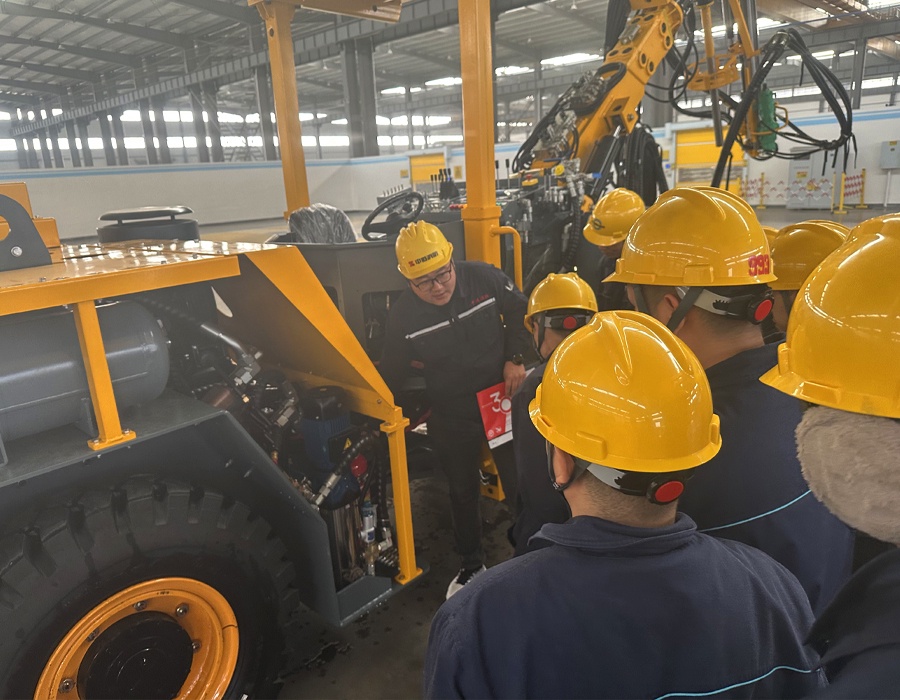
The gmfire vehicle automatic fire suppression system, centered around passive and non-electric technology and leveraging the unique advantages of mechanical power, has become a steadfast barrier protecting underground mining vehicles such as mine LHDs (Load-Haul-Dump vehicles), shield carriers, monorail conveyances, loaders, and explosion-proof trackless rubber-tired vehicles. In the deep and complex underground world, mining vehicles, acting as "steel beasts" for ore transportation and equipment support, are crucial pillars for efficient mine operations. However, the harsh underground environment—characterized by high temperatures, high humidity, dense dust, intricate electrical wiring, and frequent mechanical friction—constantly exposes these vehicles to fire threats. Once a fire breaks out, it can spread rapidly due to the special underground conditions, causing vehicle damage, production halts, and even major disasters like gas explosions or tunnel collapses, severely endangering miners' lives. Under such severe circumstances, this fire suppression system, requiring no electrical power, achieves efficient firefighting through its own mechanical structure, ensuring the safety of underground mining vehicles.
1. Eliminating Power Dependency, Adapting to Complex Environments
Traditional fire suppression systems mostly rely on electrical power. In the unique operational setting underground, power supply faces numerous unstable factors. The humid environment easily leads to short circuits and leakage in electrical equipment, with frequent voltage fluctuations, all of which can cause power-dependent fire suppression systems to fail at critical moments. Passive and non-electric technology completely breaks free from the constraints of electrical power. It utilizes mechanical principles for fire detection and activation, requiring no external power source.
2. Mechanical Fire Detection, Accurately Capturing Fire Signs
The vehicle automatic fire suppression system employs mechanical thermal detectors, acting as sensitive "tentacles" for mining vehicle safety, capable of precisely capturing early signs of fire. When the ambient temperature reaches a preset threshold, the thermal sensing element undergoes physical deformation, triggering the activation of the fire suppression device. This purely mechanical operation mode remains unaffected by underground power failures. Under extreme conditions such as power outages or voltage instability, it continues to operate stably and reliably, providing uninterrupted safety protection for underground mining vehicles. Furthermore, mechanical thermal detectors are immune to electromagnetic interference, offering fast response times and high accuracy in detecting fire signals. They can identify and alert fires in their early stages, buying precious time for firefighting actions.
3. Mechanically Driven Fire Suppression, Quickly Extinguishing Flames
When a fire occurs, the vehicle automatic fire suppression system immediately initiates the mechanically driven firefighting procedure. Its extinguishing agent storage device typically uses a pressure vessel, with agent release controlled by mechanical valves. Upon receiving the fire signal, the valves open rapidly, and the extinguishing agent is discharged under pressure through the piping system onto the fire-affected area.
This mechanically driven firefighting method features extremely fast response, capable of delivering a large volume of extinguishing agent to the fire scene in a short time, rapidly lowering the temperature and suppressing the combustion reaction. Moreover, the spray direction and flow rate of the extinguishing agent can be controlled through carefully designed nozzles, ensuring precise coverage of the fire source and enhancing firefighting efficiency. Whether dealing with electrical fires, oil fires, or solid material fires, the system leverages the powerful advantages of mechanical force to achieve efficient extinguishment.
4. Sustained Protection Capability, Preventing Re-ignition
After a fire is extinguished, preventing re-ignition is a critical link in ensuring mining vehicle safety. The passive and non-electric technology of the vehicle automatic fire suppression system endows it with sustained protection capability. After the vehicle fire is put out, the system continues to suppress the fire scenario for a certain period, effectively preventing re-ignition. Additionally, the water-based extinguishing agent used forms a protective film on the surface of combustible materials after discharge, effectively isolating oxygen and achieving efficient fire suppression. This protection mechanism acts like an added "safety lock" for the mining vehicle, ensuring the fire is completely extinguished and eliminating secondary hazards caused by re-ignition.
In the field of underground mining vehicle fire protection, the vehicle automatic fire suppression system, championing passive and non-electric technology with its unique mechanical power, has become a mainstay in safeguarding mining vehicle safety. It breaks free from electrical constraints, reduces failure risks, and provides comprehensive safety protection for vehicles in coal and non-coal mines through precise detection, efficient suppression, and sustained protection capabilities. In future development, it will continue to leverage its outstanding performance and innovative technology, leading underground mining vehicle fire protection towards a more intelligent, efficient, and reliable direction, and fortifying the safety defense line of underground mine production.
Contact Us a ReachOut For More lnfo!