
Book now
Email :
WhatsApp :

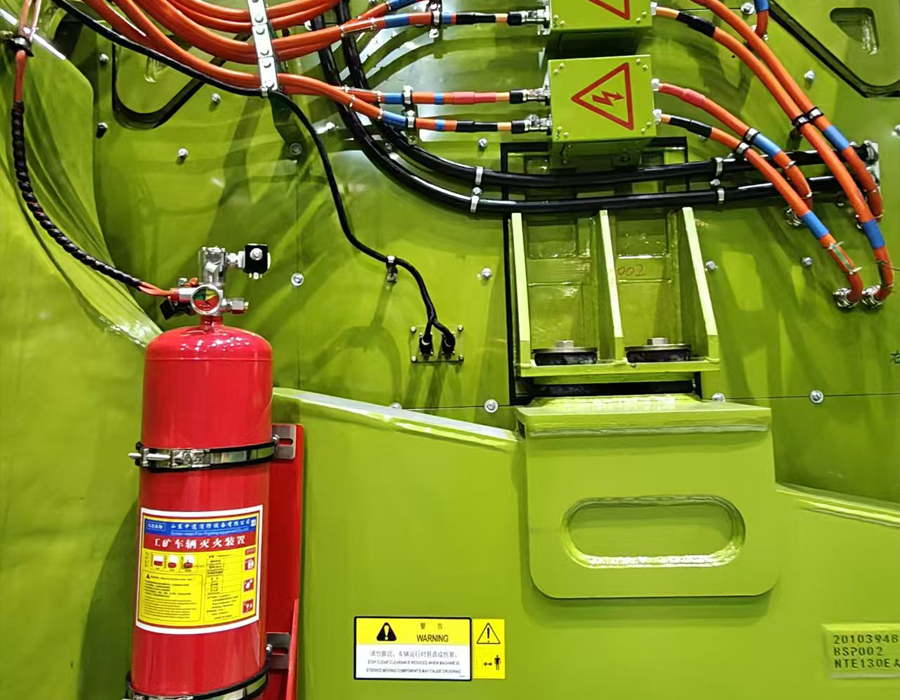
As the "food depot" of industry, mines operate under harsh conditions of high temperatures, heavy dust, and intense vibrations. Fire hazards lurk like "invisible bombs." Once a fire breaks out, it not only causes massive equipment damage and production interruptions but also directly threatens personnel safety. For a long time, traditional manual firefighting methods have suffered from slow response times and low efficiency, struggling to cope with the complex mining environment. With the refinement of regulations like the "Coal Mine Safety Regulations" and the intelligent transformation of mines, the dual drivers of policy guidance and technological innovation have given rise to automatic fire suppression systems for heavy mining equipment (GMfire digital intelligent fire prevention and extinguishing solutions). Leveraging the core advantages of "precise detection, rapid response, intelligent prevention and control, and fully unmanned operation," this system effectively solves fire protection challenges for mobile equipment, building a solid "firewall" for safe production in mines across Indonesia, Kazakhstan, and beyond.
I. Intelligent Perception: Building a 24/7 "Fire Neural Network"
Traditional manual inspections, limited by environmental noise, visibility, and human fatigue, struggle to achieve uninterrupted 24-hour fire monitoring. The primary innovation of the automatic fire suppression system lies in constructing an intelligent perception network across critical equipment areas.
This system uses strategically distributed high-precision detectors, acting like sensitive "nerve endings" for the equipment. These detectors include various types such as point-type heat detectors, K-type thermocouples, heat-sensitive cables, and flame detectors, enabling real-time collection of multi-dimensional data like temperature and flame signatures. With temperature monitoring accuracy reaching ±0.1°C, the system can detect minor temperature rises caused by bearing overheating or short circuits, allowing for early identification of deep-seated and hidden fires. This closed-loop process of "24/7 monitoring – precise identification" completely eliminates blind spots associated with manual inspections, catching fire hazards in their infancy and securing precious "golden time" for subsequent response.
II. Unmanned Operation & Millisecond Response: The Reliability Revolution of Fully Mechanical Self-Activation Technology
Underground mine environments are complex, often facing sudden power outages, electromagnetic interference, and high corrosion. Traditional firefighting equipment relying on external power and complex electronic control systems is prone to failure. The core advantage of automatic fire suppression systems lies in their "unmanned operation" and high environmental adaptability.
Current mainstream high-reliability systems commonly employ fully mechanical self-activation technology. This type of system completely eliminates dependence on electricity and manual intervention; its detection and activation mechanisms operate based on physical principles. Once the temperature reaches a preset threshold, it instantly initiates the fire suppression sequence through pure mechanical linkage, without any need for electronic signal conversion or commands. This "power-free and pressure-free" autonomous operation mode ensures stable and reliable functionality even under extreme conditions like vehicle power loss or electrical system failure. The response time from fire identification to agent discharge is compressed to seconds or even milliseconds, improving efficiency by over 90% compared to traditional manual firefighting, truly achieving "early detection and rapid reaction."
III. Precision Suppression & Customized Design: "Vehicle-Specific Plan" for Targeted Protection
Heavy mining equipment varies widely, from hundred-ton haul trucks in open pits to explosion-proof rubber-tired vehicles in confined underground spaces. Their structures, fire risks, and operating environments differ significantly. An automatic fire suppression system is not a "one-size-fits-all" product but a deeply customized solution.
The choice of extinguishing agent follows the principle of "specific agent for specific fire": For electrical equipment fires, clean perfluorohexanone agents with excellent insulation properties are used, vaporizing and absorbing heat within seconds to interrupt the combustion chain reaction. For fuel or hydraulic oil fires, superfine dry powder or water-based foam agents provide both suffocation and cooling effects. Water-based agents, known for rapid cooling, low reignition risk, and environmental friendliness, are preferred for large areas like engine compartments.
System design adheres to the concept of "tailor-made." Technical teams plan the placement, angle, and quantity of detectors and nozzles based on each machine's specific model, structural dimensions, and risk points. For example, detection thresholds might be specifically optimized for the extreme heat (exceeding 500°C) of an engine turbocharger. Underground equipment may be fitted with explosion-proof stainless steel piping and compact modules, while surface equipment might receive large-capacity cylinder banks and total-flooding coverage schemes. This customized design ensures the extinguishing agent covers the fire source with maximum efficiency and precision, avoiding agent waste and minimizing secondary damage to the equipment.
IV. Green Empowerment & Intelligent Integration: Driving High-Quality Mine Development
The development direction of modern mines is safety, efficiency, sustainability, and intelligence. Automatic fire suppression systems are not just a safety barrier but also a key driver for high-quality mine development.
Regarding environmental sustainability, many new extinguishing agents used in these systems (such as perfluorohexanone and water-based agents) are non-toxic, leave no residue, and are biodegradable. After discharge, they do not contaminate mine soil or water sources, aligning perfectly with the concept of green mining. In the construction of intelligent mines, advanced automatic fire suppression systems no longer operate in isolation. They can transmit equipment status, fire alarms, and fault diagnosis data in real-time to surface control centers or cloud platforms via 4G/5G or IoT technology. This enables managers to remotely monitor the overall safety posture, establishing an intelligent fire protection framework based on "equipment interconnectivity, intelligent early warning, and precise response." It also provides data support for predictive equipment maintenance.
Conclusion
In summary, with its comprehensive advantages of intelligent perception, unmanned operation, precision customization, environmental sustainability, and reliability, the automatic fire suppression system for heavy mining equipment has successfully solved the long-standing fire protection challenges for mobile mining machinery. It has evolved from an optional feature into a necessary "standard" and "Smart Guardian" ensuring safe production in mines, steering the global mining industry towards a safer and more efficient future.
Contact Us a ReachOut For More lnfo!